
Water Stewardship
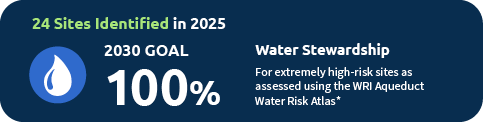
Avient is committed to responsible water stewardship across our global operations. While our manufacturing processes are predominantly dry and less water-intensive than many industrial sectors, we recognize water as a finite and precious resource, particularly at the 24 facilities we have identified in extremely high water stress areas. Our approach focuses on minimizing consumption, maximizing reuse, and building resilience where it matters most.
Clean and accessible water is vital for healthy and thriving communities around the world. Avient recognizes the indispensable role water plays in sustaining life and promoting well-being. Our commitment to sustainable water management extends beyond compliance with regulatory requirements—we proactively seek opportunities to enhance water efficiency and maximize the reuse of wastewater across our facilities. Through diligent monitoring and tracking of water usage and wastewater discharges, we identify areas for improvement and implement targeted initiatives to reduce consumption and mitigate risks. Our global approach to water management integrates strategies for tracking legal obligations, assessing management costs, and prioritizing efficiency projects to optimize resource utilization and minimize environmental impact.
Building upon our commitment to sustainable water management, Avient has standardized our water stream definitions and reporting frequency, our Position on Water Stewardship and our water stress evaluation framework. While we have collected water data from our manufacturing facilities since 2012, increased water data accuracy allows us to better understand our water sources, withdrawal rates, and discharges. Our Position on Water Stewardship reinforces our commitment to minimize water consumption, maximize reuse opportunities, and mitigate risks associated with water scarcity and pollution. We leverage the World Resources Institute (WRI) Aqueduct Water Risk Atlas to develop our water stress evaluation framework. Our evaluation identified that 38% of our facilities are located in high or extremely high water stress areas, which is why we are introducing targeted water stewardship plans for these locations, beginning with the 24 sites at highest risk.
In 2025, we are introducing a new sustainability goal to implement water stewardship plans for all facilities in extremely high-risk sites as assessed by the WRI Aqueduct Water Risk Atlas by 2030. With the introduction of this goal, we have started conducting site, supplier, and systems level risk assessments as well as site level resilience planning. When complete, this information will inform water stewardship plans that will provide a roadmap for identifying sources, recycling, alternative uses, and tracking for sites where we can have the biggest impact.
Biodiversity
Biodiversity is a cornerstone of ecosystem health and plays a fundamental role in sustaining life on Earth. While the vast majority of Avient sites are in urban and suburban areas, we recognize the critical importance of biodiversity not only for ecological balance, but also within the context of sustainable business practices. In line with our commitment to conserve biodiversity, Avient has developed a biodiversity risk assessment framework that draws upon data from the World Wildlife Fund (WWF) Biodiversity Risk Filter.
We understand that nature-related risks are highly location-specific, so each of our sites globally is assigned a biodiversity risk level based on the WWF Biodiversity Risk Filter(more details of the analysis in Metrics section). By assessing the potential impacts of our operations on local biodiversity, we can identify areas of heightened risk and implement targeted measures to minimize our ecological footprint. Our Position on Biodiversity underscores our dedication to minimizing biodiversity impact and ensuring the longterm sustainability of our operations.